You have had Passmedicine For MRCP open in a tab for three weeks. You read the first forty pages of Kumar and Clark, twice. Someone in a WhatsApp group swore Part 1 is easy if you just do questions. Someone else said they failed twice after finishing four thousand of them. The application window shuts in early November and you still have not decided between the January and the May sitting. I have been on both sides of that loop, first as a candidate and now as a mentor, and it is a bad place to spend a month.
The confusion is not your fault. The information sits in three separate places: exam rules on the Federation website, career advice on forums, and study advice from people who are selling something. Very little of it is written for a doctor doing full shifts in a Pakistani hospital. This guide puts the whole sequence in one place for 2027, and it is the same thing I say in the first session of our MRCP Part 1 course.
What MRCP opens for you
Two doors, and most candidates only think about one of them.
The first is the UK. MRCP(UK) is the standard membership qualification for internal medicine there, and it is what selection panels expect to see when you apply for training or for a service post in medicine.
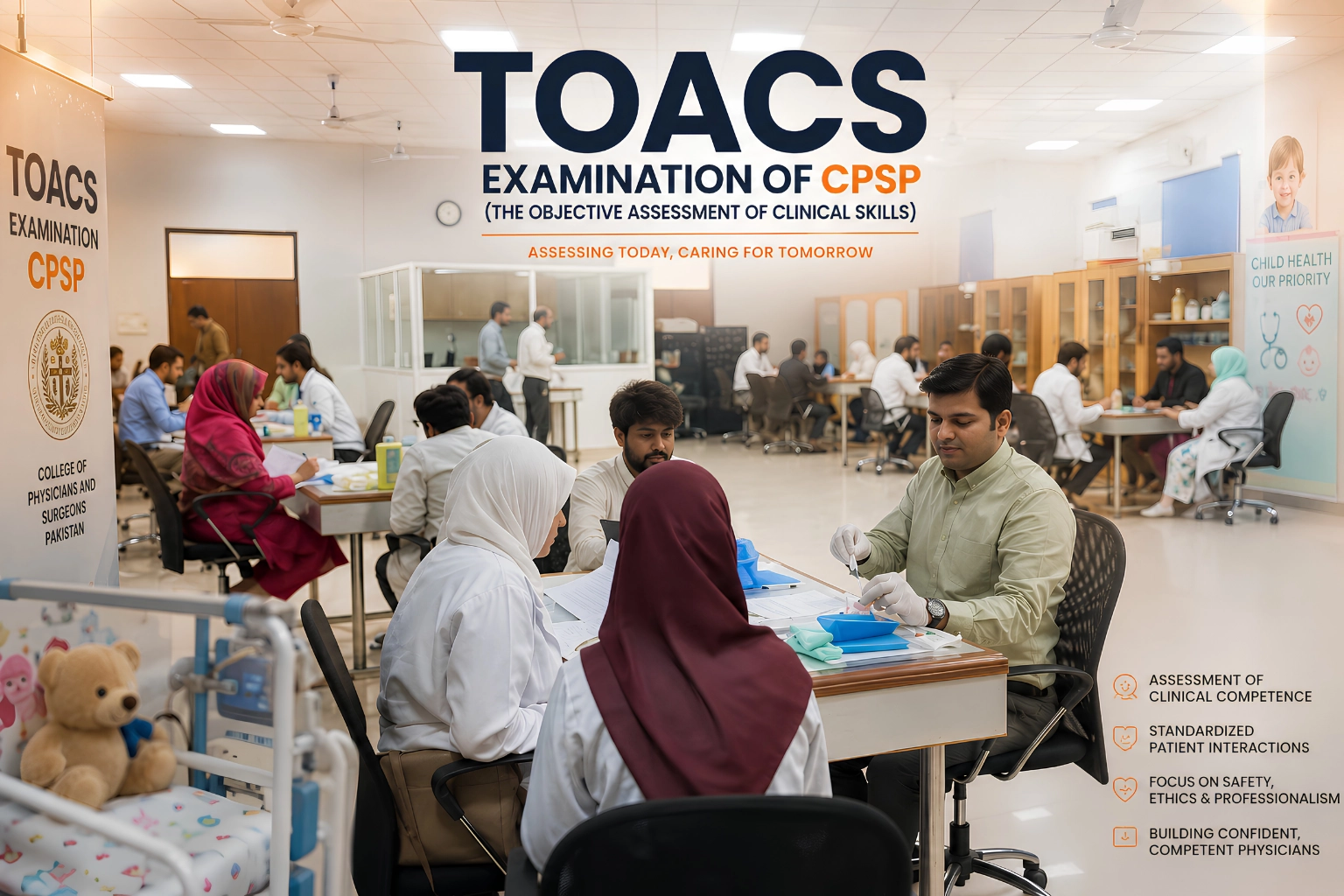
The second door is here at home, and in my experience it is the one people underestimate. The College of Physicians and Surgeons Pakistan grants exemption from FCPS Part 1, plus two years of training, to doctors who have passed MRCP from the UK or Ireland and registered it with the council. The route after that is set out in CPSP notification CPSP/Sec/2020/70, dated 26 February 2020, and it looks like this:
| Stage | What CPSP requires of an MRCP holder |
|---|---|
| Entry | Exemption from FCPS Part 1 and from two years of training, once MRCP is registered with the council |
| Specialty | Further training must be in General Medicine |
| Exam | IMM must still be passed |
| Training | Two further years |
| Research | All prescribed workshops, plus a dissertation or two research papers in indexed journals |
| Outcome | Eligibility for the final fellowship examination in General Medicine |
Rules do change, so confirm your own case on the CPSP FAQ page before you plan around it. But the shape of it is worth knowing early: for a lot of doctors, MRCP is also the shorter road to consultant status here, and nobody tells them.
The three parts, and where Part 1 sits
MRCP(UK) has three components, taken in order. Part 1 is written and tests knowledge. Part 2 Written is longer and more clinical, with data interpretation and images. PACES is the clinical examination, with real and simulated patients across five stations.
Part 1 is the gatekeeper. It is also the part where preparation habits either get built or get exposed, which is why I spend as much time on method as on content. If you learn to work through questions properly now, PACES is a different kind of hard but not a shock. If you cram and pass narrowly, Part 2 and PACES will make you pay for it later.
What the Part 1 paper actually looks like
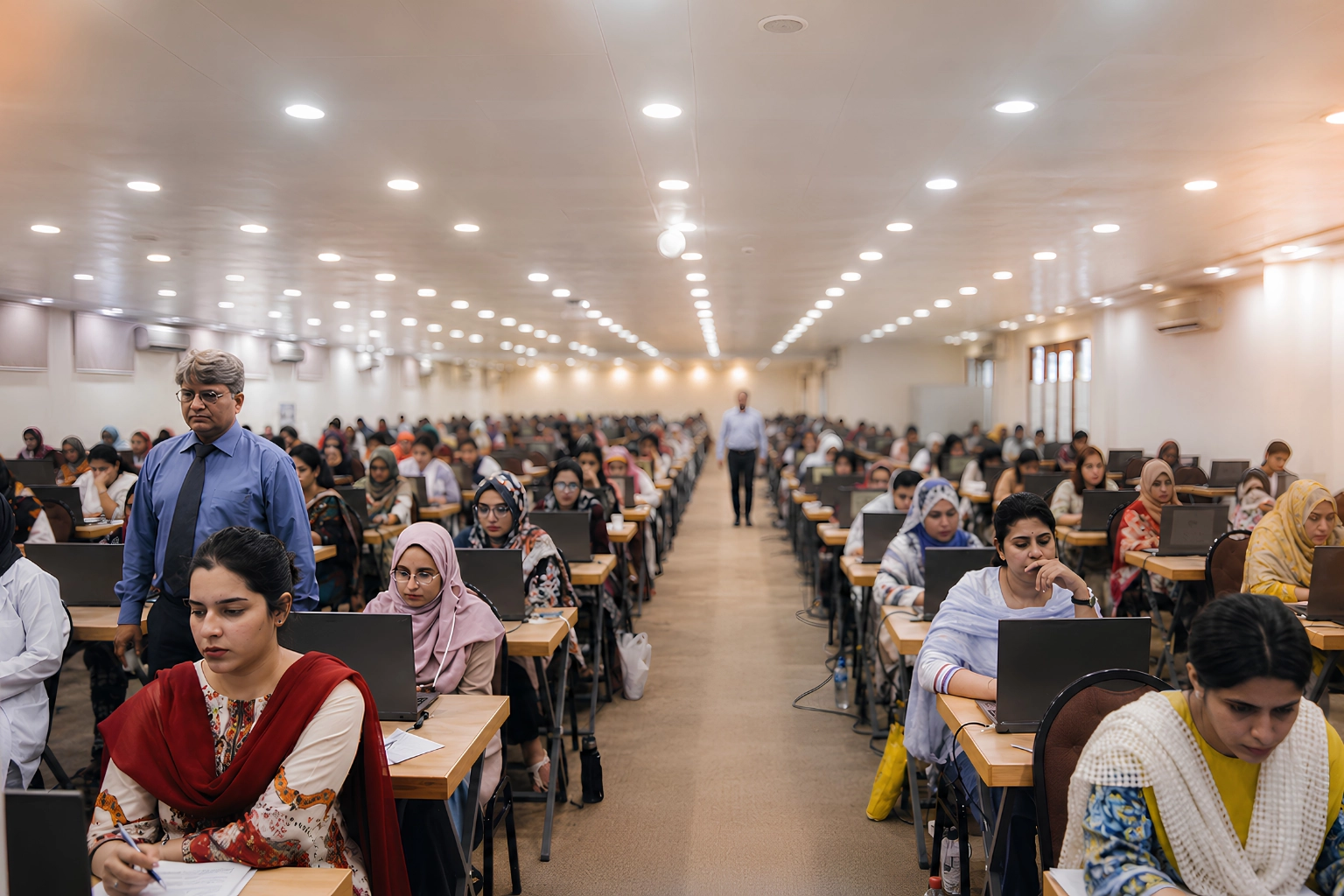
One day, two papers, three hours each. A hundred best of five questions per paper, two hundred in total. One mark per correct answer and no negative marking, so leaving anything blank is simply throwing marks away. There are no images in Part 1. It is computer based, delivered by Surpass at a test centre, and since September 2026 the exam is sat in centre rather than remotely.
The content follows a published blueprint. These are indicative numbers, not a promise, but they tell you where your revision hours belong:
| Area | Approximate questions |
|---|---|
| Clinical sciences | 25 |
| Clinical pharmacology and therapeutics | 15 |
| Cardiology, endocrinology, gastroenterology, infectious diseases, neurology, renal, respiratory, rheumatology | 14 each |
| Haematology | 10 |
| Psychiatry | 9 |
| Dermatology, geriatric medicine | 8 each |
| Oncology | 5 |
| Medical ophthalmology, palliative care | 4 each |
Look at that top row. Clinical sciences carries more weight than any single specialty, and it is the section candidates skip because it feels like undergraduate material. Statistics, immunology and genetics alone are worth roughly twelve questions. That is often the margin.
The pass mark is not a raw percentage. Results are scaled using item response theory so that different papers stay comparable, and from the 2026/1 diet the scaled pass mark for Part 1 is 450. In the 2025 reports, first attempt candidates outside UK training passed at 54.8 per cent, and first attempt UK resident doctors at 42.8 per cent. Roughly half the room does not pass. Plan for a real exam, not a formality.
Dates, fees and deadlines for 2027
Application windows open and close at 8:00am UK time, and late applications are not accepted. Three sittings, and the fee is the same for all three:
| Diet | Application period | Exam date | Fee | Results by |
|---|---|---|---|---|
| 2027/1 | 27 Oct to 3 Nov 2026 | 20 January 2027 | £520 UK, £696 international | 5 March 2027 |
| 2027/2 | 9 to 16 March 2027 | 26 May 2027 | £520 UK, £696 international | 9 July 2027 |
| 2027/3 | 13 to 20 July 2027 | 29 September 2027 | £520 UK, £696 international | 12 November 2027 |
Source: MRCP(UK) Part 1 dates and fees
Two rules to keep in mind. You need a minimum of twelve months of postgraduate experience in medical employment to sit Part 1. And you get six attempts at each part of the diploma, with one exceptional seventh possible on educational grounds. Withdrawals before the exam starts do not count as attempts, which matters if you reach the week before and know in your gut you are not ready.
The resources I actually recommend
I have watched students buy four question banks and finish none of them. Two banks, done properly, beat five skimmed.
| Resource | What it is good for | How I use it with students |
|---|---|---|
| Passmedicine | Concise notes attached to every question, and the closest match to how Part 1 phrases things | Main bank. First full pass over twelve to fourteen weeks, then a second pass on flagged and wrong questions only |
| Pastest | Harder stems and better explanations for clinical sciences and pharmacology | Second bank in the last six weeks, plus timed mocks |
| A structured theory course | Fixing the concepts a question bank assumes you already have, especially statistics, immunology and genetics | Alongside the first pass, not after it |
| Oxford Handbook of Clinical Medicine | Quick reference when an explanation does not land | Lookup only. Do not read it cover to cover |
I teach the theory course at PrepXperts myself, and I am obviously not neutral about it. So here is the honest version: if you can already read a Passmedicine explanation on renal tubular acidosis and follow every step of it, you may not need a course at all. Most of my students cannot, and that gap is what the classes are for. You can see who teaches what on our mentors page.
How I would plan sixteen weeks
Work backwards from the exam date, not forwards from today.
Weeks one to twelve are your first full pass. Around forty questions a day gets you through Passmedicine with room to breathe. Read every explanation, including for the questions you got right, because guessing correctly is not knowing. Keep one notebook for facts that surprised you, and nothing else in it.
Weeks thirteen and fourteen are the second pass, restricted to what you flagged and what you got wrong. This is where the score moves. Most people skip it and then wonder why their mock percentage never climbs.
Weeks fifteen and sixteen are timed practice under real conditions. Three hours, a hundred questions, no phone. That works out to about 1.8 minutes per question, which sounds generous until a long stem eats four minutes and you start rushing. Sit at least four full papers before the real one.
One more thing. Twenty focused minutes on a post-call day counts. Zero minutes because you were waiting for a free weekend does not.
Start with the date, not the syllabus
Everything above only works if there is a date at the end of it. Pick your diet, look up the application window, and put both in your phone today. Then choose your bank, choose your start date, and begin. The doctors I see pass are rarely the cleverest ones in the batch. They are the ones who booked early and kept turning up.
If you want structure around that, our MRCP Part 1 course runs on a diet-based schedule with live classes, weekly assessments and a mentor you can actually message. Enrolment for the 2027 diets is open now.
FAQs
When should I sit Part 1 after graduating? You need twelve months of postgraduate medical employment to be eligible. Sitting within the first two years after graduation tends to work well, because your basic sciences are still warm.
Can I pass with only a question bank? Some people do. Most of the ones I have taught who tried it and failed had the same gap: clinical sciences and pharmacology, where a bank tests knowledge it assumes you already built somewhere else.
Is Part 1 marked against other candidates? No. It is a fixed standard set by scaled scoring, so your result depends on your own performance, not on beating the room.
How many times can I attempt it? Six attempts at each part of the diploma, with an exceptional seventh available on educational grounds. Withdrawing before the exam begins does not count as an attempt.
Does MRCP help if I never leave Pakistan? Yes. CPSP grants exemption from FCPS Part 1 and two years of training to MRCP holders, with further training in General Medicine. Check the current position with CPSP for your own case.
How many hours a day do I need? Three to four focused hours on working days is enough over sixteen weeks. Consistency beats intensity here, and the students who study six hours twice a week are usually the ones resitting.