
Ask ten doctors about emergency medicine and you will get two answers. Some will tell you it is the most interesting job in the hospital. Others will describe corridor care, twelve-hour waits, and a colleague who left for anaesthetics and never looked back. Both groups are describing the same specialty accurately, which is what makes the decision hard. If you are weighing MRCEM, you have probably heard both versions and you are trying to work out which one is the future.
Here is the short answer: the pressure is real, and so is the opportunity, and the second one exists partly because of the first. This article covers what emergency medicine actually looks like right now, why MRCEM is the qualification worth having, how the three exams work, and what is changing in April 2027 that will affect anyone sitting the Primary. Our MRCEM course is built for candidates working through this pathway alongside full clinical hours.
The honest case for emergency medicine
NHS England’s own urgent and emergency care plan does not pretend things are comfortable. It states that A&E satisfaction was already at a record low and has deteriorated further. It describes burnout among frontline acute staff as clear from the conversations they had with them. It uses the phrase “corridor care” without flinching.
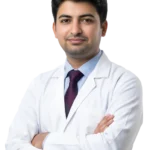
So why is Dr. Ubaid Ur Rehman Khizer, who teaches our MRCEM programme, so confident about where this specialty is going?
Because of the numbers underneath the complaints. Over 140,000 people access urgent and emergency care in England every day. Attendance has risen by 90% since 2010/11. Ambulance service contacts are up 61% over the same period. That demand is not going anywhere, and a health system cannot respond to it by employing fewer emergency physicians.
What it can do, and is doing, is spend. The 2025/26 plan allocated over £370 million in capital, including £250 million for roughly 40 new same-day emergency care centres and urgent treatment centres, £26 million for mental health crisis assessment centres, and £75 million for mental health inpatient capacity. Every one of those units needs emergency clinicians.
The specialty is under strain because it is essential. Those are not competing facts. If you want a career where you will not struggle to find work in the UK, Ireland, the Gulf, Singapore or Australia for the next thirty years, this is one of the safer bets in medicine. Whether you will enjoy it is a separate question, and only shifts in a department will answer that one.
What MRCEM actually opens
MRCEM is the membership qualification of the Royal College of Emergency Medicine. Passing all three parts makes you eligible for College membership and marks you as ready for higher specialist training.
For international graduates it does more than that. It is the qualification that makes you a credible applicant for the Medical Training Initiative, for trust-grade and clinical fellow posts in UK emergency departments, and eventually for the Portfolio Pathway to specialist registration. Gulf states and much of Southeast Asia recognise it directly. It travels further than most people expect when they start.
One thing worth knowing early: RCEM advises that IELTS Level 7 is the expected standard for completing MRCEM and FRCEM examinations. If your English certification is not there yet, start that in parallel rather than afterwards.
The three exams, in order
Unlike some Royal College exams, MRCEM has a fixed sequence. You must pass Primary, then SBA, then OSCE. No skipping ahead.
| MRCEM Primary | MRCEM SBA | MRCEM OSCE | |
|---|---|---|---|
| Type | Theory | Theory | Practical clinical |
| Questions | 180 SBAs | 180 SBAs | 16 stations |
| Structure | 1 paper | 2 papers | 8 minutes per station, 1 minute reading, 2 rest stations |
| Duration | 3 hours | 4 hours (2 × 2 hours, 1 hour break) | 2 hours 42 minutes |
| Content | Basic sciences | Full range of ED conditions and presentations | Clinical and communication skills |
| Where | Test centres worldwide | Test centres worldwide | London, Kuala Lumpur, Chennai, Hyderabad |
| Results | 6–8 weeks | 6–8 weeks | About 5 weeks |
Neither theory paper uses negative marking. A correct answer scores one, a wrong answer scores zero, and there is no penalty. Answer everything.
The Primary was called the FRCEM Primary between 2016 and 2021, and the SBA replaced the FRCEM Intermediate SAQ in 2021. Old guides still float around under the old names, which is worth knowing when you are buying second-hand books.
Pass marks are set by the Angoff method for the Primary. The SBA adds one standard error of measurement on top of the Angoff cut score, and the OSCE uses borderline regression plus one standard error. The practical effect is that there is no fixed percentage to aim for, and the mark you need shifts slightly between sittings.
The syllabus change coming in April 2027
This is the part most candidates have not heard about yet, and it matters if you are planning your Primary.
On 3 August 2026, RCEM announced that an updated Basic Sciences Syllabus will become the official reference for the MRCEM Primary from the 21 April 2027 examination onwards. The current syllabus dates from June 2010, so this is overdue.
The College has been clear about the boundary:
- 27 October 2026 Primary: current syllabus applies, no change to preparation
- 21 April 2027 Primary and after: updated syllabus becomes the official reference
RCEM says the new version builds on the existing disciplines of anatomy, physiology, pharmacology, microbiology, pathology and evidence-based medicine, and that supporting resources will be published ahead of implementation.
So this is a revision, not a demolition. But if you were planning to sit the April 2027 Primary using a 2010-era syllabus and a stack of old question banks, adjust that plan. And watch the RCEM news page, because the updated document had not been published when this article went live.
Fees, dates, and two details that cost people money
Applications open at 10am UK time on the opening date and close automatically at 4pm UK time seven days later. Late applications are not accepted. RCEM runs an email reminder list for application windows, and signing up for it is five minutes well spent.
Upcoming MRCEM dates:
| Exam | Date | Applications open | Applications close |
|---|---|---|---|
| SBA | 13 January 2027 | 22 October 2026 | 29 October 2026 |
| OSCE (London) | 18–29 January 2027 | 4 November 2026 | 11 November 2026 |
| OSCE (Chennai) | 22–26 February 2027 | 4 November 2026 | 11 November 2026 |
| Primary | 21 April 2027 | 20 January 2027 | 27 January 2027 |
| OSCE (London) | 18 May – 4 June 2027 | 25 February 2027 | 4 March 2027 |
| SBA | 2 June 2027 | 17 March 2027 | 24 March 2027 |
| OSCE (Hyderabad) | 5–9 July 2027 | 25 February 2027 | 4 March 2027 |
Fees for 2026:
| Exam | UK member | International member | UK non-member | International non-member |
|---|---|---|---|---|
| Any theory exam | £429 | £485 | £525 | £609 |
| OSCE location | Member | Non-member |
|---|---|---|
| London | £586 | £695 |
| India | £987 | £1,186 |
| Malaysia | £1,121 | £1,345 |
Now the two details.
RCEM membership must be paid at least 24 hours before the application window opens to get the member rate. Paid on the same day, or any time after? No discount. On the international OSCE that gap is around £200, and it is entirely avoidable. Sort your membership out well before the window, not the morning it opens.
Tax is charged on your country of residence, not where you sit the exam. RCEM is required to collect local digital services taxes, VAT or GST depending on where you live, and that amount is added on top of the published fee. Budget for it rather than being surprised at checkout.
The OSCE is the bottleneck
The two theory papers run at Surpass test centres worldwide, so getting a seat is rarely the problem. The OSCE is different. It runs in exactly four places: London, Kuala Lumpur, Chennai and Hyderabad.
For a candidate in Pakistan, that means travel, and for London it means a visa. The College has been adding capacity, over 640 extra OSCE places in three years and another 160 for 2026, but four venues is still four venues.
The practical advice: work out where you will sit your OSCE before you sit your Primary. Check the visa timeline for that country. Note that the international OSCE dates are published further ahead than most people look, and that the Chennai and Hyderabad windows open on the same days as London sittings, so you are choosing between them rather than holding both as options.
Where to start
If emergency medicine is what you want, the sequence is not complicated.
Get your IELTS or OET sorted first, or at least started, because it gates everything downstream and takes longer than people plan for.
Join RCEM before you apply for anything. The member discount pays for the subscription almost immediately, and the 24-hour rule means late joining costs you the saving on that sitting.
Sit the Primary while your basic sciences are still relatively fresh. It is the exam that rewards recent graduates and punishes people who leave it until they are five years into clinical practice and have not opened a physiology book since.
Then work backwards from an OSCE date, not forwards from today. That is the constrained resource, and everything else fits around it.
Our MRCEM course covers Primary, SBA and OSCE preparation, taught by emergency physicians including Dr. Ubaid Ur Rehman Khizer, who has worked through this pathway himself. You can also browse our other MRCEM guides or meet the faculty.
Sources and further reading
- RCEM: MRCEM exams
- RCEM: Exam calendar and fees
- RCEM: New Basic Sciences Syllabus to apply from 2027
- NHS England: Urgent and emergency care plan 2025/26
Frequently Asked Questions
Can I sit the MRCEM exams in any order?
No. MRCEM has a fixed sequence: Primary, then SBA, then OSCE. Each must be passed before you can apply for the next.
Is there negative marking in the MRCEM theory exams?
No. Both the Primary and the SBA award one mark for a correct answer and zero for an incorrect one, with no deduction. Leave nothing blank.
Does the 2027 syllabus change affect the exam I am booked for?
Only if you are sitting the Primary on or after 21 April 2027. The 27 October 2026 Primary uses the current Basic Sciences Syllabus and RCEM has confirmed no change to preparation for that sitting.
Where can I sit the MRCEM OSCE?
London, Kuala Lumpur, Chennai and Hyderabad. The theory exams run at test centres worldwide, but the OSCE does not, so plan travel and visas around it.
Do I need to be an RCEM member to sit the exams?
No, but membership reduces the fee substantially, and the subscription must be paid at least 24 hours before the application window opens for the discount to apply.
Do I need GMC registration or a UK job to sit MRCEM?
No. Candidates sit MRCEM from all over the world without UK registration. RCEM does advise that IELTS Level 7 is the expected English standard for completing the qualification.